


 Recreational Vehicle
 BUS Floor
 Subway Floor
 Coach Floor
 School Floor
 Hospital Floor
 LVT Flooring
 Sports Flooring
 Office Floor
 Paving tools
 Rubber Floor


 Jetlee


How LVT and SPC Flooring Differ and Which One Fits Your Space
You might wonder how LVT SPC flooring options compare and which one suits your home best. SPC flooring stands out for its strong core, handling uneven surfaces and resisting dents better than LVT. Many homeowners choose SPC for its easy installation and cost-effectiveness. Recent statistics show that rigid core products, especially SPC, make up a large part of the residential flooring market. When you look for new floors, consider durability, water resistance, comfort, price, and how well each fits your rooms.
Key Takeaways
- SPC flooring offers superior durability and stability, making it ideal for high-traffic areas and moisture-prone spaces.
- LVT flooring provides a softer, warmer feel underfoot, making it a great choice for living rooms and bedrooms.
- Both LVT and SPC are waterproof, making them suitable for kitchens, bathrooms, and basements.
- Consider your budget: SPC may cost more upfront but lasts longer, while LVT offers affordable options with a variety of styles.
- SPC flooring features an easy click-lock installation, perfect for DIY projects, while LVT may require more precision.
LVT Flooring Overview

What Is LVT
You may see LVT flooring in many homes and businesses. LVT stands for Luxury Vinyl Tile. This type of flooring uses layers of vinyl and other materials to create a strong and flexible tile. Manufacturers use PVC, which is safe and recyclable. The top layer protects the tile from scratches and stains. You can find LVT in styles that look like stone, wood, or ceramic. LVT SPC flooring options give you choices for every room.
Here is a table showing how the main materials in LVT impact performance:
| Performance Aspect | Description |
|---|---|
| Environmental Protection | PVC is an environmentally friendly and non-toxic renewable resource. |
| Wear Resistance | LVT has a wear-resistant layer that can withstand up to 300,000 revolutions. |
| Elasticity and Impact Resistance | The soft texture of LVT provides good elasticity and recovery from heavy impacts. |
| Fireproofing | Qualified LVT can achieve a fireproof index of B1, indicating excellent fire resistance. |
| Waterproofing | Vinyl resin makes LVT naturally resistant to water, preventing damage and mildew from humidity. |
Features And Benefits
You get many advantages when you choose LVT flooring. The surface resists scratches and dents, so your floors stay looking new. LVT is waterproof and moisture-resistant. You can use it in kitchens, bathrooms, and basements without worry. The tiles feel soft underfoot and recover well from heavy impacts. You clean LVT easily because it does not have grout lines. You can install LVT over existing floors, which saves time and money.
- LVT mimics the look of marble, granite, and other natural materials.
- You enjoy simple maintenance with no grout work.
- The tiles are affordable compared to stone or ceramic.
- LVT is highly durable and waterproof.
- You can install LVT yourself in many cases.
LVT SPC flooring gives you flexibility in design and installation. You can match your style and budget while getting a floor that lasts.
SPC Flooring Overview

What Is SPC
You may hear about SPC flooring when you look for strong and modern floors. SPC stands for Stone Plastic Composite. This flooring uses a special core made from stone powder and PVC. The core gives the floor extra strength and keeps it from bending or warping. You can use SPC in homes, offices, or stores because it handles heavy use and changes in temperature.
Here is a table that shows the main parts of SPC flooring and how they help make it rigid:
| Component | Contribution to Rigidity |
|---|---|
| SPC Core | Provides rigidity, waterproofing, and dimensional stability. |
| High-density stone powder | Enhances rigidity, preventing dents and impacts. |
| Low thermal expansion coefficient | Maintains dimensional stability under temperature changes. |
SPC flooring feels solid under your feet. It does not flex like some other vinyl floors. You can trust it to stay flat and strong, even if the room gets hot or cold.
Features And Benefits
You get many benefits when you choose SPC flooring. The rigid core makes it very tough. You do not have to worry about dents from furniture or scratches from pets. SPC flooring resists water, so you can use it in kitchens, bathrooms, or basements.
Here are some key advantages of SPC flooring:
- Exceptional strength and stability for busy spaces.
- Superior resistance to wear, impact, and moisture.
- Consistent performance in different climates.
- Fast installation with a click-lock system.
- Low maintenance—just sweep and mop to keep it clean.
- Many design options that look like wood or stone.
- Supports sustainable building with low VOC emissions.
You can finish projects faster because SPC flooring installs quickly. The floor stays beautiful for years with little effort. Many people choose LVT SPC flooring for homes and businesses because it combines style, strength, and easy care.
Tip: If you want a floor that handles heavy traffic and moisture, SPC flooring is a smart choice.
LVT SPC Flooring Comparison
Core Structure Differences
You need to know what makes LVT and SPC different at their core. The main difference comes from the materials used in the core layer. Here is a table to help you see the contrast:
| Flooring Type | Core Material | Characteristics |
|---|---|---|
| LVT | Simple PVC core | Flexible and soft |
| SPC | Stone-plastic composite material | Strong structure and denser feel |
SPC flooring uses a stone-plastic composite core. This core gives it a solid and dense feel. LVT uses a simple PVC core, which makes it softer and more flexible.
Durability And Stability
You want your floor to last, especially in busy spaces. SPC flooring stands out for its high density and strength. Here are some facts:
- SPC flooring has a density of about 2 grams per cubic centimeter.
- LVT flooring has a density closer to 1.4 grams per cubic centimeter.
- The higher density of SPC helps it absorb sound and resist damage.
The table below shows how both types perform in durability tests:
| Durability Factor | SPC Flooring | LVT Flooring | Test Method | Commercial Recommendation |
|---|---|---|---|---|
| Dent Resistance | Excellent (1500 psi) | Good (800 psi) | ASTM F1914 | Warehouses, retail |
| Scratch Resistance | 4H pencil hardness | 3H pencil hardness | EN 16094 | Lobbies, corridors |
| Indentation Recovery | 100% recovery | 85-95% recovery | 24-hour test | Office spaces |
| Wear Layer Durability | 20+ mil options | 12-28 mil options | Taber abrasion | High-traffic retail |
| Expected Lifespan | 15-25 years | 10-15 years | Commercial use | Long-term installs |
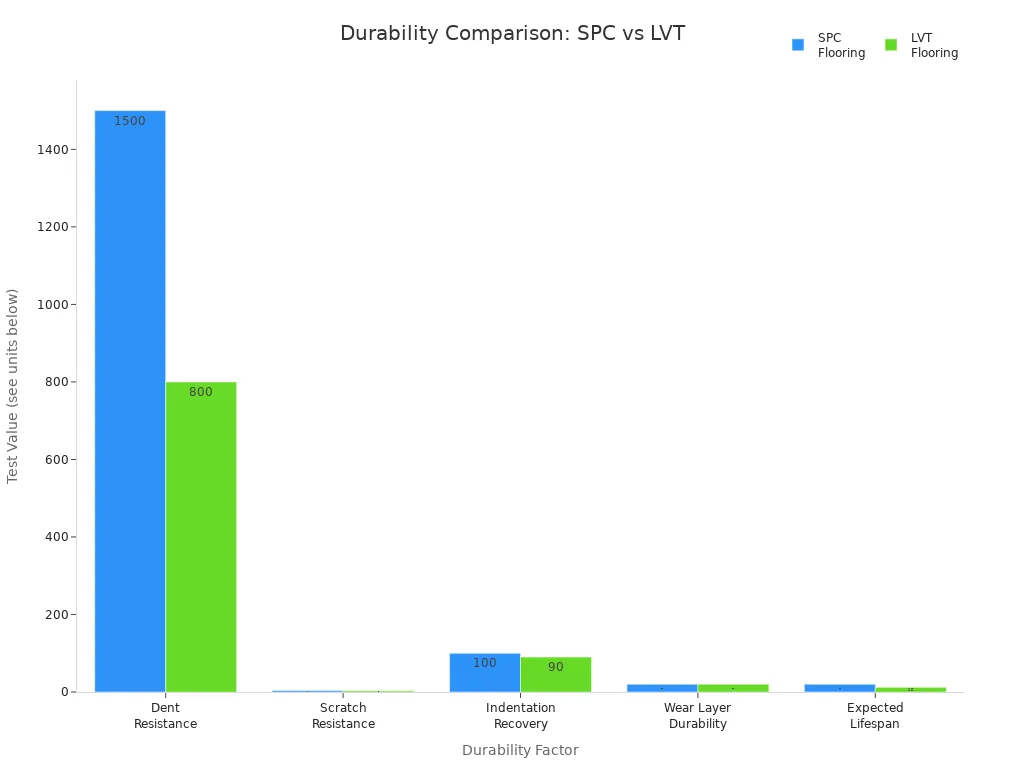
SPC flooring also handles temperature changes better. The stone-based core keeps it stable, even in rooms that get hot or cold. LVT can move or change shape if the temperature goes up or down quickly.
Water Resistance
You may need flooring that stands up to water. Both LVT and SPC offer strong water resistance. Here is what you should know:
SPC flooring is waterproof, making it an excellent option for moisture-prone areas like bathrooms and kitchens. It undergoes various tests to ensure its waterproof capabilities meet global standards.
- LVT flooring has a waterproof core that blocks moisture.
- The surface of LVT is non-porous, so it resists stains and is easy to clean.
- SPC flooring’s rigid core adds extra water resistance.
- Both types work well in kitchens, bathrooms, and basements.
- Proper installation and regular cleaning help keep your floors safe from water damage.
Comfort Underfoot
You want your floors to feel good when you walk on them. LVT and SPC feel different underfoot. The table below shows the main differences:
| Flooring Type | Comfort Characteristics | Stability Characteristics |
|---|---|---|
| LVT | Softer step; warmer feel | Flexible glue-down, beautiful visuals, waterproof |
| SPC | Feels harder | Rigid stone core, ultra-durable, most stable in heat/humidity |
Thicker flooring, such as 6mm or more, gives you more comfort and better sound insulation. A good underlay also helps. LVT usually feels softer and warmer, which many people like for bedrooms and living rooms. SPC feels firmer but gives you more stability.
Installation Methods
You may want to install the floor yourself. Here is a table to show the main installation methods:
| Flooring Type | Installation Method | Key Features |
|---|---|---|
| SPC Flooring | Locking | Easy and fast installation, no glue, reusable |
| LVT Flooring | Glue or Locking | Needs more precision for locking, solid and beautiful |
SPC flooring uses a click-lock system. You can install it quickly without glue. You can also remove and reuse it. LVT can use glue or a locking system. The locking system needs careful work but gives a strong finish.
Price And Value
You want to get the best value for your money. Here is a price comparison:
| Flooring Type | Price Range (per square foot) | Installation Cost (per square foot) |
|---|---|---|
| LVT | $2 to $6 | $1 to $3 |
| SPC | $2 to $7 | $1 to $3 |
SPC flooring usually costs a bit more, but it lasts longer—15 to 25 years. LVT lasts about 10 to 15 years. SPC needs less cleaning and fewer repairs, so you save money over time. LVT may need more frequent cleaning.
- SPC flooring typically lasts longer (15-25 years).
- SPC requires less frequent cleaning and fewer repairs.
- Over 20 years, SPC can be more economical, even if it costs more at first.
Design Options
You want your floor to look great. Both LVT and SPC come in many styles, colors, and patterns. Here are some popular design options:
- Plank: Clean, straight lines for a modern look.
- Large Herringbone: Big planks for a bold pattern.
- Chevron: Angled pieces for a stylish effect.
- Basket Weave: Classic design that fits many rooms.
- Renaissance: Detailed patterns for a luxury feel.
- Bloc: Geometric shapes for a unique look.
You can choose from:
- Modern styles with neutral colors like gray, white, or black.
- Traditional looks with warm tones such as beige or brown.
- Country styles with weathered wood or antique textures.
- Coastal styles with light blues and greens.
LVT stands out for its realistic wood and stone looks. It also feels softer and warmer, which many people enjoy in homes. SPC gives you realistic designs but has fewer style choices than LVT. Both types offer wood grain, tile, and stone textures.
Tip: If you want the most design options and a softer feel, LVT may be your best choice. If you want durability and stability, SPC is a strong pick.
LVT SPC flooring gives you many choices for every room. You can match your style, budget, and needs with either option.
Pros And Cons Summary
LVT Pros And Cons
You want to know what makes LVT a good choice and what you should watch out for. LVT gives you many benefits, but it also has a few drawbacks. Here is a table to help you see the main points:
| Pros | Cons |
|---|---|
| Design Flexibility | Higher Cost |
| Durability | Installation Challenges |
| Low Maintenance |
LVT lets you pick from many designs. You can match your floor to any style you like. The surface stands up to scratches and dents, so you do not worry about damage in busy rooms. You clean LVT easily, and it does not need much care. You may find that LVT costs more than some other floors. Sometimes, installing LVT can be tricky, especially if you want a perfect finish.
Tip: If you want a floor that looks great and lasts a long time, LVT gives you strong value.
SPC Pros And Cons
You may want to compare SPC to LVT before you decide. SPC flooring has its own set of strengths and weaknesses. Here is a quick look at the main features:
| Attribute | SPC Flooring |
|---|---|
| Water Resistance | Excellent |
| Dimensional Stability | Very High |
| Foot Comfort | Firm |
| Subfloor Tolerance | High |
Pros of SPC:
- You get high water resistance. The core does not swell, even if water spills.
- You enjoy strong dimensional stability. The stone content keeps the floor from moving or changing shape.
- You can install SPC over many types of subfloors, even if they are not perfect.
Cons of SPC:
- You may notice the floor feels firmer under your feet. Some people find it less comfortable for long periods.
- You need to make sure the subfloor is flat. If not, the locking system can break.
LVT SPC flooring gives you options for every room. You can choose based on what matters most to you—comfort, strength, or style.
Choosing LVT Or SPC For Your Space
Moisture-Prone Areas
You need flooring that stands up to water in places like bathrooms, basements, and kitchens. Moisture can cause damage and mold if you choose the wrong material. Both LVT and SPC flooring offer strong water resistance. You can use them confidently in wet rooms. Vinyl flooring resists water, mildew, and mold. Luxury Vinyl Tile gives you a high-end look and protects against moisture. Stone tile and ceramic tile also work well, but they require regular sealing and grout maintenance.
- Vinyl flooring: Affordable, flexible in style, water-resistant.
- Luxury Vinyl Tile: Moisture-resistant, perfect for bathrooms and basements.
- Stone tile: Beautiful, needs sealing.
- Ceramic tile: Waterproof, easy to clean.
- Sheet vinyl: 100% waterproof, minimal seams.
You can rely on LVT SPC flooring in moisture-prone areas. It keeps your space safe from water damage and offers many design choices.
Tip: Choose waterproof flooring for bathrooms, basements, and kitchens to prevent mold and mildew.
High-Traffic Spaces
You want your floors to last in busy areas like hallways, entryways, and commercial spaces. Heavy foot traffic and rolling equipment can wear down floors quickly. LVT is designed to withstand heavy use. Its multi-layer construction resists scratches, impacts, and moisture. You clean LVT easily, which helps in places like healthcare facilities. SPC flooring also handles high traffic, but LVT performs better in demanding commercial settings.
- LVT: Durable, stable, resists scratches and impacts, easy to clean.
- SPC: Strong, stable, suitable for homes and light commercial use.
You can trust LVT SPC flooring in high-traffic spaces. It keeps your floors looking new and reduces maintenance.
Note: For commercial spaces, LVT offers outstanding durability and stability.
Comfort And Warmth
You want your floors to feel comfortable and warm, especially in living rooms and bedrooms. The right flooring makes your home cozy. LVT feels softer and warmer underfoot. SPC feels firmer and cooler. Multilayer flooring, including LVT, gives you more comfort compared to stone or tile.
| Flooring Type | Comfort Rating | Warmth Rating |
|---|---|---|
| LVT | Softer | Warmer |
| SPC | Harder | Cooler |
You can enjoy a softer step and warmer feel with LVT. SPC works well in areas where stability matters more than comfort.
Tip: Choose LVT for bedrooms and living rooms if you want a cozy and comfortable space.
Budget Considerations
You need to think about your budget when choosing flooring. SPC flooring costs a bit more at first, but it lasts longer and handles high-traffic areas well. You recover your investment quickly because SPC needs fewer repairs. LVT costs less, but it may not last as long in busy spaces.
| Consideration | SPC Flooring | LVT Flooring |
|---|---|---|
| Durability | Long-lasting, handles high-traffic, cost-effective | Durable, but may need replacement |
| Initial Cost | Slightly higher, recovers investment quickly | Lower, varies by style |
| Room Suitability | Thicker options for kitchens and corridors | Suitable for most rooms |
You should set a budget before you choose. SPC flooring offers reasonable pricing and long-term durability. LVT gives you affordable options and many styles.
Note: Establish your budget first. Choose SPC for long-term savings or LVT for upfront affordability.
DIY Installation
You may want to install your new floor yourself. SPC flooring uses a click-lock system. You can install it easily and quickly. LVT installation is more complex and may require glue or careful locking. SPC lowers installation costs and saves time.
| Flooring Type | Installation Ease | Cost Implication |
|---|---|---|
| SPC Flooring | Very easy | Lower installation costs |
| LVT Flooring | Moderate | Higher installation costs |
You can finish your project faster with SPC. LVT takes more effort but gives you a strong finish.
Tip: Choose SPC flooring if you want a simple and quick DIY installation.
You can match your needs, style, and budget with LVT SPC flooring. Think about moisture, traffic, comfort, cost, and installation before you decide.
You can see the main differences between LVT and SPC flooring in the table below:
| Feature | LVT Flooring | SPC Flooring |
|---|---|---|
| Construction | Compressed vinyl layers | Stone Composite core |
| Waterproof | Some varieties | Yes |
| Durability | Excellent | Excellent |
| Installation | Glue-down or click system | Click installation |
For bathrooms and basements, luxury vinyl tile or plank works well because it resists water and feels soft. Kitchens benefit from water-resistant vinyl or porcelain tile. In living rooms, you may prefer LVT for comfort. When you choose, think about durability, comfort, budget, installation, and eco-friendliness. Pick the floor that fits your space and your needs best.